
Faith And Conflict: The St. Bartholomew’s Day Massacre
Disclosure: This post contains affiliate links. If you click through and make a purchase, We may earn a commission at no additional cost to you.



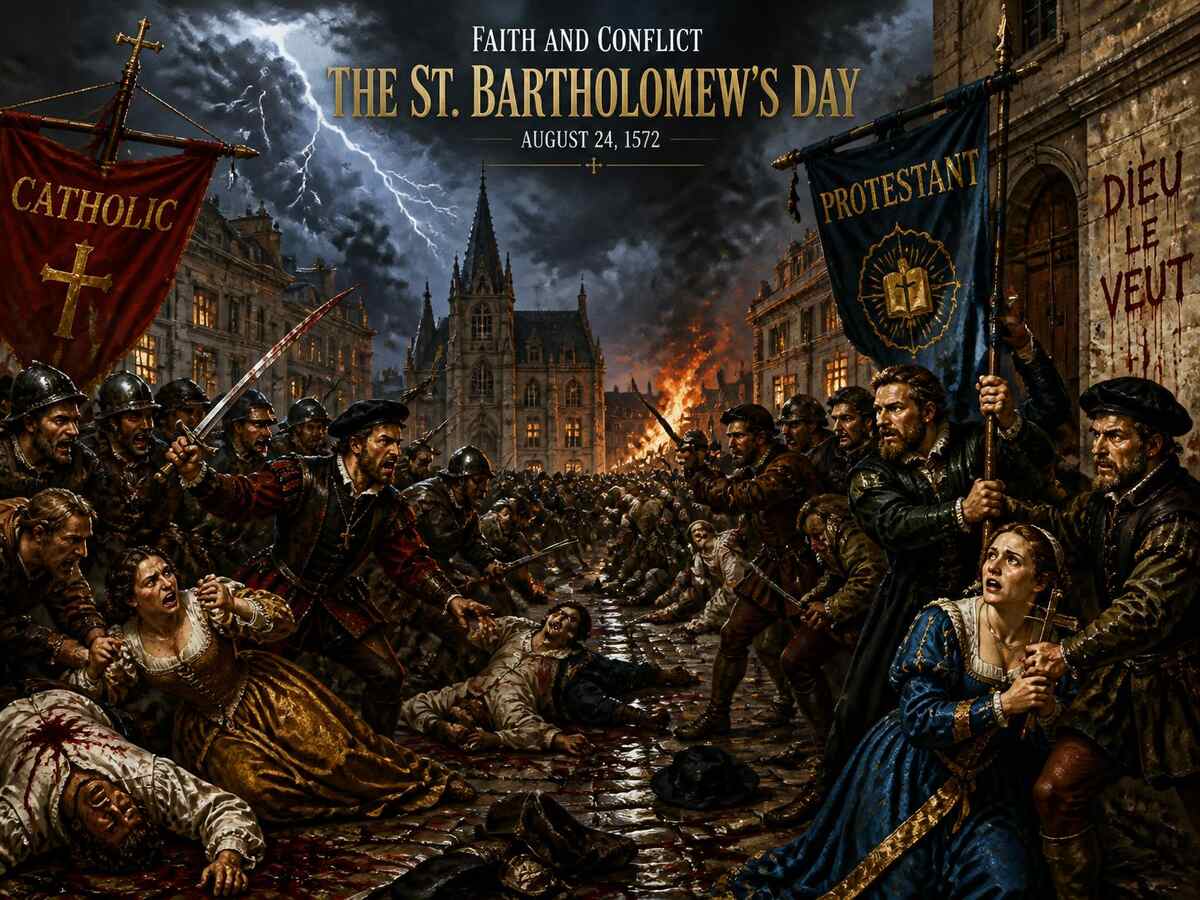
The St. Bartholomew’s Day Massacre kicked off on August 24, 1572, marking one of the darkest chapters in French history. This sudden outbreak of violence started in Paris and quickly spread across several regions. Being informed about the background helps understand the underlying cause of such brutality instead of just relying on oversimplified accounts about Catholic invasion, which overshadows the complex internal conflict.
Protestants affected by the massacre were known as Huguenots. These were primarily Calvinists and constituted a significant minority within France, caught up in a series of conflicts with Catholics known as the French Wars of Religion. Understanding who the Huguenots were—and their belief systems—sheds light on why these tensions were so intense.
It’s essential to appreciate the human scale behind this tragedy. Death toll estimates from the massacre widely differ, ranging from several thousand to perhaps as many as 30,000 individuals. Such figures require critical assessment, relying on various sources while remaining open to discrepancies, as historical records from this period can be fragmented and often biased.
Identifying this event as merely Catholics ‘invading’ highlights misinformation. It’s important to see the context: much of the violence was inflicted by French Catholics upon their Protestant neighbors, highlighting a brutal example of internal religious strife rather than an outside attack. The motivations included both individual acts of vengeance and orchestrated political ploys backed by royal assent, local misinformation, and long-standing enmities.
A Kingdom Divided: Why Catholic–Protestant Tensions Exploded
The French Wars of Religion were deeply rooted in political and religious pressures, fueling the explosive Catholic-Protestant tensions that erupted across the country. At the heart of these tensions was a complex web of disagreements about worship rights, royal authority, and noble rivalry that seemed to push France to the brink.
Religious differences weren’t just personal beliefs but intertwined with every aspect of life and governance. Sermons and pamphlets fueled discord, turning theological disputes into widespread fear and dehumanization. These messages spread suspicion and rage, setting the stage for potential violence at any moment.
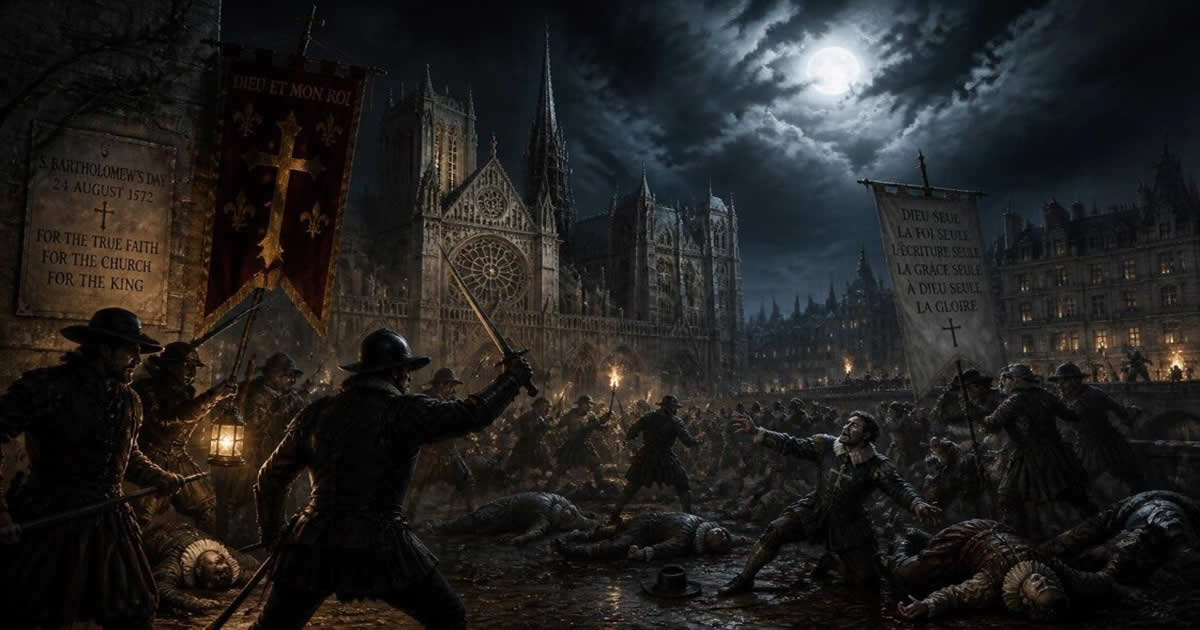
Amid these rising tensions, the Peace of Saint-Germain in 1570 attempted to offer temporary respites, granting certain concessions to the Huguenots. But distrust ran deep, often churning just beneath the surface despite such efforts for peace. Violence simmered in the background, waiting for a spark to bring it to the forefront again.
One such spark was the politically strategic marriage between Margaret of Valois, a Catholic princess, and Henry of Navarre, a Protestant leader. This union, intended to cement Catholic-Protestant peace, ironically became a focal point for unrest. The gathering of Huguenot leaders in Paris for the wedding brought rival factions close, intensifying the feeling of impending conflict. Understanding these dynamics can guide us in appreciating not just the factual account but the emotional and political complexities that often lead to violence.
The Paris Trigger: The Attempt on Coligny and the Decision to Kill
Admiral Gaspard de Coligny was a prominent figure within the Huguenot movement, and his influence at King Charles IX’s court stirred concern among Catholics who saw him as a threat to their power. Understanding Coligny’s role is key to understanding how tensions flared.
Days before the massacre, an assassination attempt on Coligny took place on August 22, 1572, and he was gravely wounded. This attempt heightened an already fraught situation, escalating fears of retaliation among Catholics in Paris. The attempt on his life was a critical turning point that heightened mistrust and paranoia.
Ready for the next level of truth? The Volume 2 exposes even deeper cosmic secrets, decode advanced occult knowledge, ancient mysteries, and the hidden truths of reality.

With emotions running high, the question of responsibility becomes complex. King Charles IX, considered young and impressionable, appeared swayed by political advisors and his formidable mother, Catherine de’ Medici. Yet historical records suggest a nondescript consensus rather than direct orders, muddling who was truly accountable.
Among the royal council and noble factions like the Guise family, there was a push for action against Huguenot leaders perceived as plotting against the crown. Decisions made behind closed doors led to targeted eliminations, starting with Coligny, which quickly devolved into indiscriminate, widespread violence.
Experts continue to debate whether there was a premeditated plan for massacre orchestrated by the royal family or if it was a panicked reaction to the assassination attempt. The lack of a clear command structure painted a picture of chaos and fear, making historical judgments about intent and planning challenging.
How the Massacre Unfolded: From Targeted Murders to Mass Violence
The violence that erupted in Paris initially targeted Huguenot leaders. Admiral Gaspard de Coligny was among the first casualties, marking the grim start to a wave of killings. But what began as politically motivated executions quickly spiraled out of control into broader chaos.
Royal orders may have acted as a catalyst, with municipal authorities and armed groups carrying out fatal directives. But it wasn’t merely about following commands. Ordinary citizens, driven by fear and propaganda, took up arms against their neighbors, often motivated by personal vendettas or opportunism.
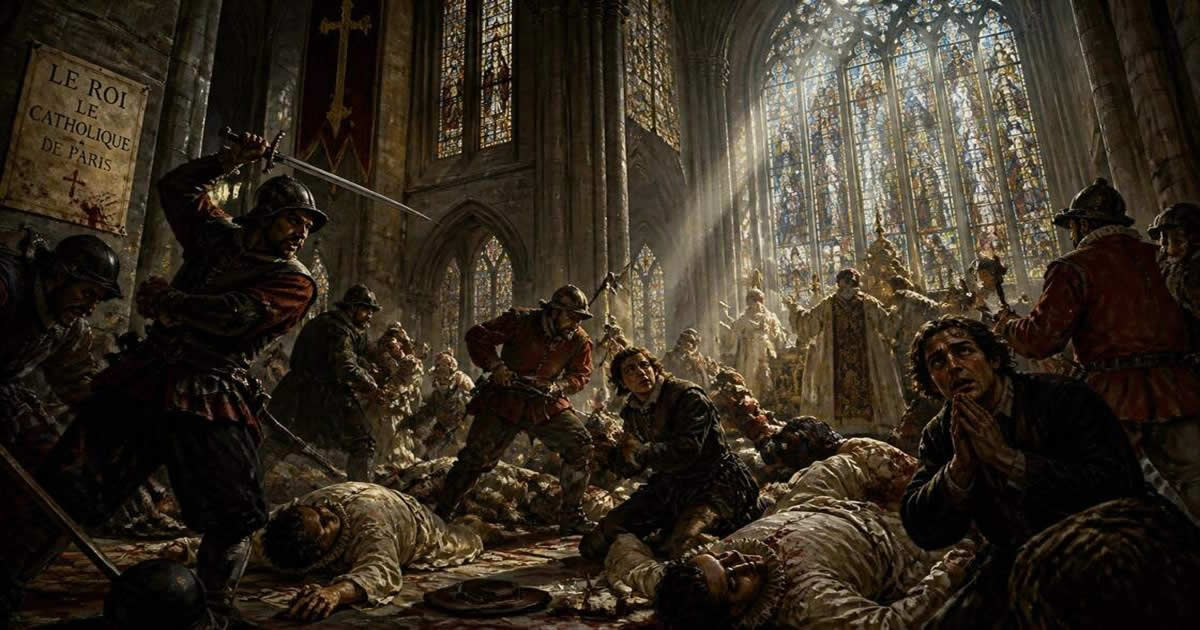
Marked identities, such as the white fabric armbands worn by Catholics, defined the ‘other.’ Lists of names, local grievances, and even homes became tools of destruction, deciding who was spared and who was not. This mass action was not a spontaneous uprising but a blend of pre-existing tensions and new opportunities for settling old scores.
The massacre’s ferocity spread beyond Paris, overtaking cities like Orléans and Lyon. Each locale had its own motivations and leaders, shaping distinct but related episodes. The violence was sometimes less about religious fervor and more about local dynamics, which must be understood in their context.
Interpreting these tragic events requires seeing beyond the immediate carnage to the societal undercurrents that made such brutality possible. The layers of local animosity, incitement, and practical survival all contributed to a scenario where mass violence could scale so heartbreakingly fast.
Who Was Responsible? Accountability, Complicity, and Historical Debate
Assigning responsibility for the St. Bartholomew’s Day Massacre is a challenging task due to the layers of involvement across different societal levels. From the choices of King Charles IX and the powerful influence of Catherine de’ Medici to the actions of the Catholic nobility and the Guise faction, the chain of accountability is as complex as it is controversial.
The immediate decisions that led to the violence in Paris originated from a closed circle involved in the court’s turmoil. King Charles IX’s role is particularly debated; he was seen as young and influenced by those around him. Yet, some historians argue this plan wasn’t fully premeditated but an accelerated response to the attempted assassination of Coligny and fears of a Protestant uprising.
Local governments and Catholic clergy also played significant parts in propelling violence, particularly as the massacre expanded beyond Paris to other cities. Their motivations and responsibilities vary significantly, showing that this wasn’t just about religious zeal but involved intricate local politics and social pressures.
Decode the hidden language of the cosmos and connect with ultimate source energy through the power of sacred geometry.
Historians grapple with the nature of the killings—were they a spontaneous eruption or the endgame of long-standing animus? There’s substantial debate over whether the orders were calculated or chaotic responses to spiraling tensions, making accountability a continually evolving discussion.
It’s crucial to avoid assigning collective guilt to all Catholics or French society. Many Catholics did not participate, with some even risking their lives to protect their Protestant neighbors. Insight into these individual acts of courage and humanity provides a necessary balance to the narrative of violence.
For those studying this era, examining various perspectives and the intricacies of each account is critical. This isn’t about simplifying to place blame, but understanding how distrust and fury produced one of history’s troubling massacres.
Legacy: What St. Bartholomew’s Day Means for Faith, Memory, and Historical Truth
The immediate aftermath of the St. Bartholomew’s Day Massacre left a deep scar on the Huguenot communities, fundamentally altering the landscape of French society. It further intensified the cycle of retaliation and violence that characterized the French Wars of Religion, pushing the nation toward more protracted conflict and instability between Catholic and Protestant factions.
Beyond France, the massacre echoed across Europe, affecting international diplomacy and altering perceptions of religious violence. It served as a grim warning of the destructive potential of sectarian hatred, further complicating efforts at religious tolerance and peace throughout the continent.
The diverse narratives that emerged in the wake of the massacre have shaped its enduring legacy. Protestant writers highlighted the brutal persecution they faced, framing the massacre as evidence of Catholic tyranny. Meanwhile, Catholic narratives often portrayed the events as a necessary evil or downplayed the tragedy. These competing versions influenced how different groups remembered and taught this piece of history.
Discover Our Featured Articles: Forbidden History: Hidden Narratives & Suppressed Knowledge
St. Bartholomew’s Day’s legacy extends into modern times, offering poignant lessons about the perils of sectarianism and the ease with which rhetoric can fuel violence. It serves as a powerful reminder of the dangers inherent in dehumanizing others and allowing prejudice to dictate actions.
This topic is part of the broader Forbidden History framework, where hidden narratives, censored discoveries and supressed knowledge, are explored in depth.