

The History And Evolution Of Atheistic Thought
Disclosure: This post contains affiliate links. If you click through and make a purchase, We may earn a commission at no additional cost to you.




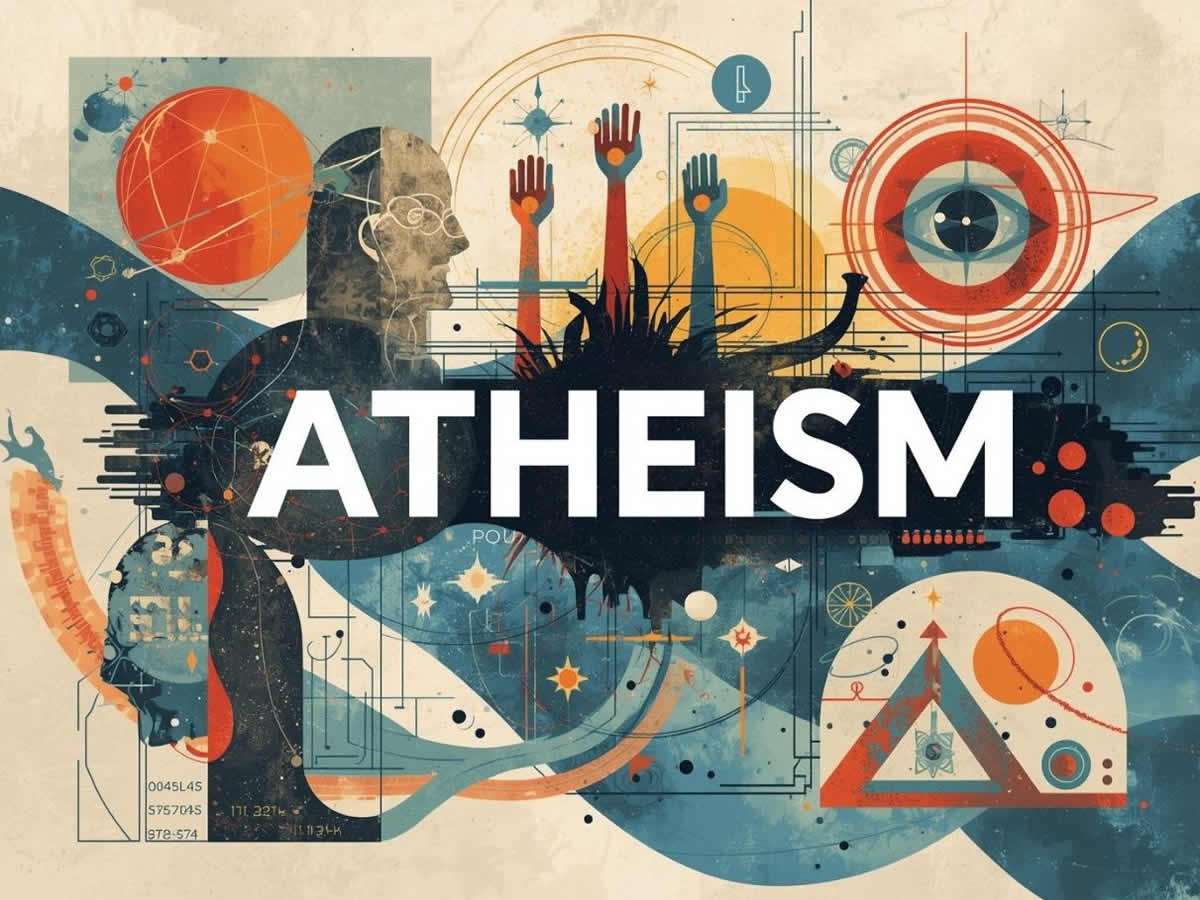
Breaking away from myth and superstition to embrace reason has been a venture centuries in the making. Ancient philosophy laid the groundwork for what we now recognize as atheistic thought. Philosophers like Epicurus and some Sophists began questioning the influence of the divine on human life. They weren’t as anti-religious as they were rational thinkers seeking natural explanations over supernatural ones.
Skepticism didn’t originate in a vacuum. Its roots can be traced back to early societies where societal norms were first tested by thinkers bold enough to challenge the status quo. In these societies, questioning the divine wasn’t just an act of dissent but a pathway to knowledge and progress.
Figures such as Diagoras and texts like the ancient Indian Charvaka school’s writings publicly challenged religious orthodoxy. Although challenging divine beliefs was not well received, these texts and figures played crucial roles in shifting perspectives. This was especially true in societies open to philosophical debate.
Cultural and societal influences played a massive role. In communities where polytheism was prevalent, doubt served as an essential tool for driving intellectual inquiry. These cultural settings allowed some wiggle room for individuals to explore new ideas that deviated from traditional beliefs and encouraged a search beyond the divine for answers. The blend of philosophical curiosity, social factors, and emerging trade routes opened channels for these atheistic ideas to travel and evolve further.
The Renaissance Rationalism: Seeds of Modern Atheism
The Renaissance was more than just a rebirth of art and culture—it was an era that fostered a resurgence in rationalism and individual thought, laying the groundwork for modern atheism. Scientific discoveries began to unravel many of the mysteries previously attributed to divine intervention. People started to rely on reason and evidence rather than take religious explanations at face value.
Humanism played a pivotal role. It emphasized human potential and creativity, encouraging people to look within themselves and the natural world for understanding rather than heed religious dogma. Humanists like Erasmus and Machiavelli championed ideals centered on human reason and empirical evidence rather than supernatural beliefs—this shift in thinking opened doors to more secular discussions.
Unlock the hidden language of reality. The Book of Symbolism takes you beyond ancient signs, offering a transformative journey into your consciousness.
Philosophers such as Baruch Spinoza and David Hume were crucial during this period. Their writings questioned long-standing religious and metaphysical assumptions. Spinoza interpreted God as synonymous with nature, while Hume critiqued religion through empirical skepticism, questioning the possibility of miracles and divine revelations.
As critical thinking and individuality took root during the Renaissance, they encouraged a more secular outlook. People began relying more on empirical evidence and less on religious doctrine to live their lives. This era laid much of the intellectual groundwork for the atheistic philosophies that would later thrive, marking a significant turn toward secularism in human thought.
Industrial Age Revolution: Atheism in the Modern Era
With the Industrial Revolution came a dramatic shift not only in how people lived and worked but also in how they perceived religion and spirituality. There was a move from traditional beliefs to a greater reliance on scientific methods. This was partly due to the rapid pace of technological advancements that demanded practical solutions over spiritual explanations.
The era witnessed many public atheistic movements and manifestos that embraced the possibilities of human achievement without divine intervention. This period was marked by an intellectual and cultural awakening, as individuals and groups questioned the relevance of religious dogma in a world increasingly driven by scientific discovery.

World wars and major cultural shifts also played roles in fostering atheistic thought. These events prompted people to question previously held beliefs about divine protection and moral imperatives shaped by religion. The immense human suffering and moral complexities showcased during these times led many to reconsider traditional religious outlooks.
Prominent intellectuals and scientists, such as Bertrand Russell and Sigmund Freud, contributed to the growth of atheism by challenging the role of religion in modern society. Their work often highlighted how religious beliefs could constrain intellectual progress. They advocated for secularism and rational thought as better pathways for social and personal development.
Digital Age: Atheism Now and Future Directions
As we navigate the digital age, atheism has found a robust online platform for expression and community building. The internet, with its global reach, facilitates more open discussions about atheism, allowing people from diverse backgrounds to connect and share ideas. This has made atheistic thought more visible and accessible than ever before.
Contemporary atheists have continued to shape the narrative around secularism by engaging with broader audiences through books, podcasts, and social media. Figures like Richard Dawkins and the late Christopher Hitchens have been instrumental in sparking dialogue about the place of religion in contemporary life. Their work emphasizes critical thinking and encourages questioning traditional beliefs.

This ultimate three-eBook collection delivers profound insights to awaken your consciousness, elevate your mindset and and enrich your soul.
Secularism is emerging as a robust political and social movement. In many parts of the world, discussions around secular governance and the separation of church and state are gaining momentum. These conversations are integral to discussions of religious freedom and personal belief systems, paving the way for more inclusive, neutral public policies.
Looking ahead, atheism might continue to grow as societies become more interconnected and culturally diverse. Predictive trends suggest a future in which personal beliefs, including atheistic views, are more widely accepted and respected in mainstream discourse. As technology advances, like artificial intelligence and bioengineering, discussions around ethics and morality may drive further exploration into what role, if any, religious structures play in modern life.
The Most Prominent Atheist Scientists In The World
Atheist scientists have made significant contributions to our understanding of the universe. Through their groundbreaking work, they’ve shown how scientific inquiry can transcend religious beliefs, offering a worldview rooted in empirical evidence and reason.
Richard Dawkins stands out with his extensive work in evolutionary biology. His book, ‘The God Delusion’, isn’t just about questioning religion but also celebrates the wonders of scientific logic. Dawkins has played a crucial role in sparking discussions about atheistic thought and science, inspiring many to think critically about spirituality and knowledge.

Transitioning to the stars and beyond, Stephen Hawking’s contributions in theoretical physics and cosmology have been nothing short of revolutionary. His knack for making complex ideas accessible to the general public, especially through his bestseller ‘A Brief History of Time’, has left an enduring mark on how we view science and religion.
Neil deGrasse Tyson brings astrophysics into the public eye with charisma. As a science communicator, he bridges the gap between complex scientific concepts and the general populace. His work with the Hayden Planetarium and shows like ‘Cosmos: A Spacetime Odyssey’ have even further expanded public understanding and interest in science.
Sam Harris, with his background in neuroscience, further pushes the conversation about reason and faith into public dialogue. His works, such as ‘The End of Faith’, challenge readers to prioritize rational evidence over religious dogma, encouraging open and honest debate about the role of religion in modern society.
Discover Our Featured Articles: Esoteric Wisdom: Ancient Teachings & Inner Awakening
These scientists, with their unique perspectives, underscore the essential links between scientific discovery and philosophical exploration. They serve as powerful advocates for a reality grounded in evidence, inspiring future thinkers to pursue knowledge that’s free from dogmatic constraints. Their legacy continues to motivate many, pushing forward the idea that logical and empirical inquiry enriches our understanding of the world.
This topic is part of the broader Esoteric Wisdom framework, where ancient symbolic systems, consciousness studies, and hidden philosophical traditions are explored in depth.
Related Topics