Forbidden History: Hidden Narratives & Suppressed Knowledge


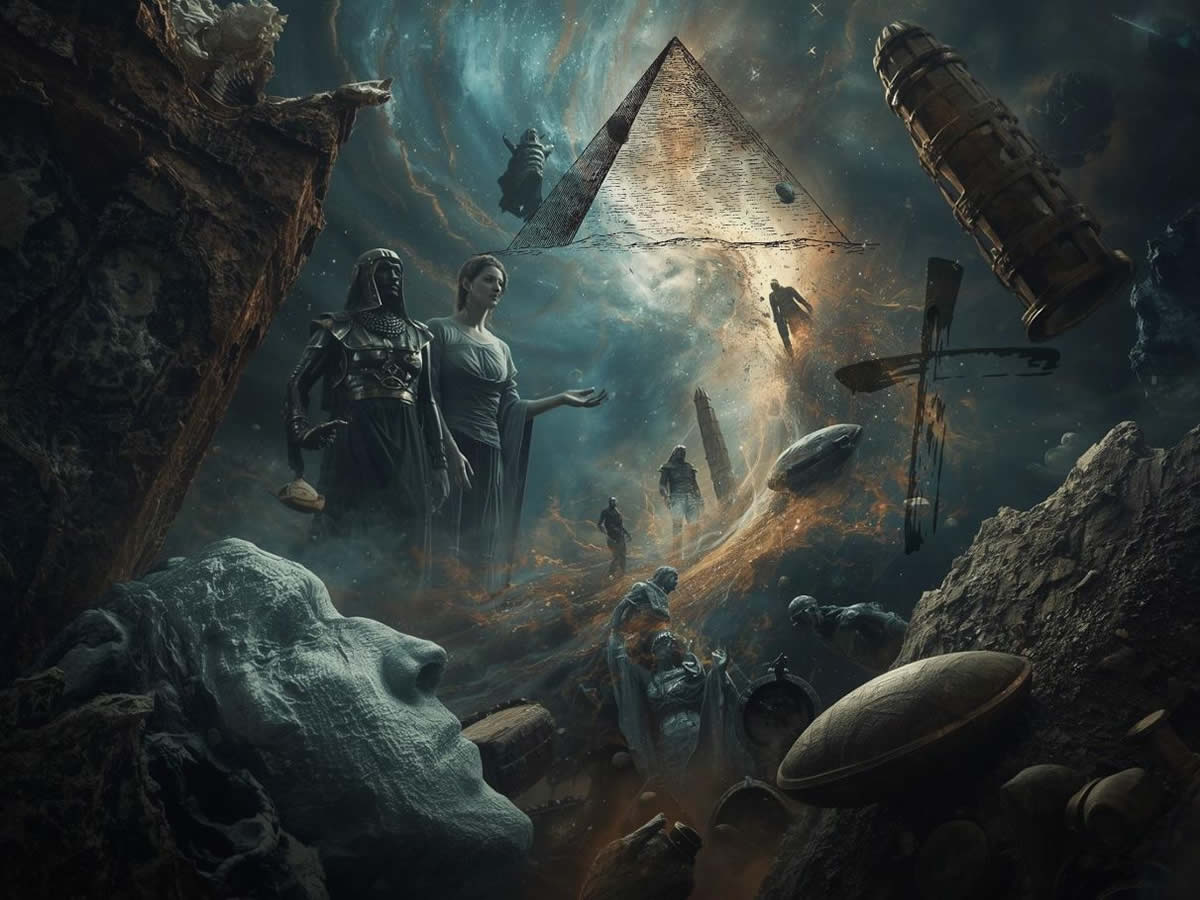
The concept of Forbidden History suggests that the story of humanity we find in textbooks is often a curated selection, shaped by the victors or institutional gatekeepers of their time. This field of inquiry focuses on “hidden narratives”—accounts of advanced ancient civilizations, unconventional archaeological finds, scientific discoveries, marginalized cultural perspectives and other fields that have been systematically ignored or suppressed to maintain the status quo.
Proponents argue that strictly controlled academic paradigms act as a filter, dismissing “anomalous” artifacts as mere hoaxes or myths. From the possibility of a lost maritime culture predating the last ice age to the erasure of indigenous oral traditions, these suppressed voices challenge our linear view of progress.
Exploring this hidden knowledge isn’t just about uncovering secrets; it is a quest to reclaim a more nuanced and diverse heritage. By questioning the “official” record, we open the door to a deeper understanding of human resilience and ingenuity that has remained in the shadows for centuries.
What Is Forbidden History?
History is often told through the names of emperors, military leaders and politicians, through wars, revolutions and borders that have shifted on world maps. However, beneath this official chronicle there is another, much darker story. This story often called forbidden history, refers to historical narratives, discoveries, or interpretations that challenge dominant academic or institutional timelines.
It does not automatically imply conspiracy. Rather, it addresses:
- Overlooked archaeological findings
- Alternative chronologies
- Lost civilizations
- Suppressed events and discoveries
- Cultural reinterpretations
Throughout history, knowledge has often been filtered through political, religious, and institutional frameworks. As a result, some narratives become dominant — while others fade into obscurity. Forbidden history examines what may have been excluded, simplified, or prematurely dismissed.
This include:
- Events or theories intentionally censored from official curricula for political or ideological reasons.
- Well-documented facts that are deliberately ignored to protect a specific narrative.
- Marginalized groups or secret operations, that aren’t part of the “mainstream” record.
- Re-examination of historical facts to challenge traditional views.
Why Historical Narratives Become Restricted
History is not just a record of events. It is a structure of interpretation.
Three major forces shape accepted history:
- Institutional authority
- Political influence
- Cultural continuity
When discoveries threaten established paradigms, they often face resistance. This does not necessarily imply malicious suppression — but paradigm shifts historically encounter friction.
Examples throughout scientific history show that new frameworks are frequently resisted before acceptance. Therefore, forbidden history explores these friction points.
Lost Civilizations and Advanced Ancient Cultures
One of the most compelling aspects of alternative historical inquiry concerns lost or highly advanced ancient civilizations.
Across the globe, we find:
- Megalithic structures with precise astronomical alignments
- Architectural feats difficult to replicate with assumed primitive tools
- Mythological accounts of catastrophic resets
Sites such as:
- Göbekli Tepe
- Puma Punku
- Atlantis Empire
- Ancient Sumer
- The Great Pyramid complex

continue to raise questions about technological capability and timeline assumptions.
Many ancient traditions describe global floods, celestial impacts, or sudden destruction. Some researchers propose that advanced civilizations may have existed prior to known historical records and were erased by natural catastrophes. While speculative, these hypotheses are increasingly explored in interdisciplinary research combining archaeology, geology, and astronomy.
Were ancient cultures more advanced than typically portrayed? Or do we underestimate their ingenuity? Yet, forbidden history does not claim certainty — it invites deeper examination.
Browse Our Most Impactful Reads: The Ancient Sumer – The Cradle Of Civilization.
Censored Discoveries and Archaeological Controversies
Controversies surrounding “censored discoveries” arise from conflicts between alternative researchers and academia, with proponents claiming institutions ignore findings that contradict official linear history, such as OOPArts (out-of-place artifacts).
While critics argue these claims often lack rigorous evidence and rely on selective data, discoveries like Göbekli Tepe demonstrate that historical understanding does evolve. This tension between the pursuit of “lost civilizations” and established scientific methodology remains a central point in modern debates about the past.
Throughout history, certain findings have sparked controversy:
- Out-of-place artifacts (OOPArts)
- Unusual skeletal remains
- Ancient maps with unexplained precision
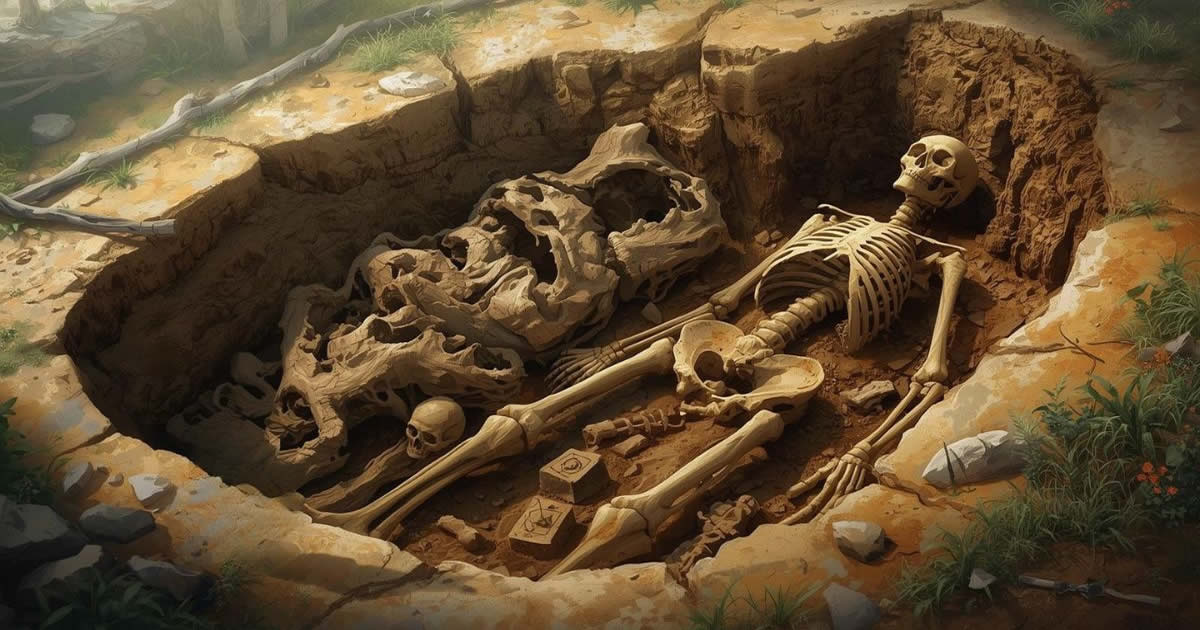
Often, these discoveries are later debunked — but sometimes they are quietly archived without broader investigation. Forbidden history examines how academic gatekeeping, funding structures, and professional risk can influence which discoveries receive serious attention.
However, critical thinking is essential here. Skepticism must apply equally to mainstream and alternative claims.
Browse Our Most Impactful Reads: Uncovering The Mysteries Of Ancient Human Giants.
Alternative Chronologies
The conventional timeline of human civilization places advanced urban development around 6,000–10,000 years ago. However, discoveries like Göbekli Tepe challenge linear assumptions about hunter-gatherer simplicity.
Alternative chronologies explore whether:
- Civilization may be cyclic rather than linear
- Knowledge may have been inherited from earlier epochs
- Myths may encode historical memory
These models remain controversial but increasingly discussed.
The Shadow Side of Religion: Power, Domination and Spiritual Manipulation
Throughout history, religious institutions have not functioned solely as spiritual guides but also as centers of political authority, social regulation, and ideological control.
While religion has inspired art, morality, and community cohesion, it has also been used to justify wars, censorship, persecution, and the suppression of alternative knowledge systems.
Understanding the darker historical dimensions of religion allows us to:
- Examine how belief systems can be weaponized
- Recognize patterns of narrative control
- Distinguish spirituality from institutional power
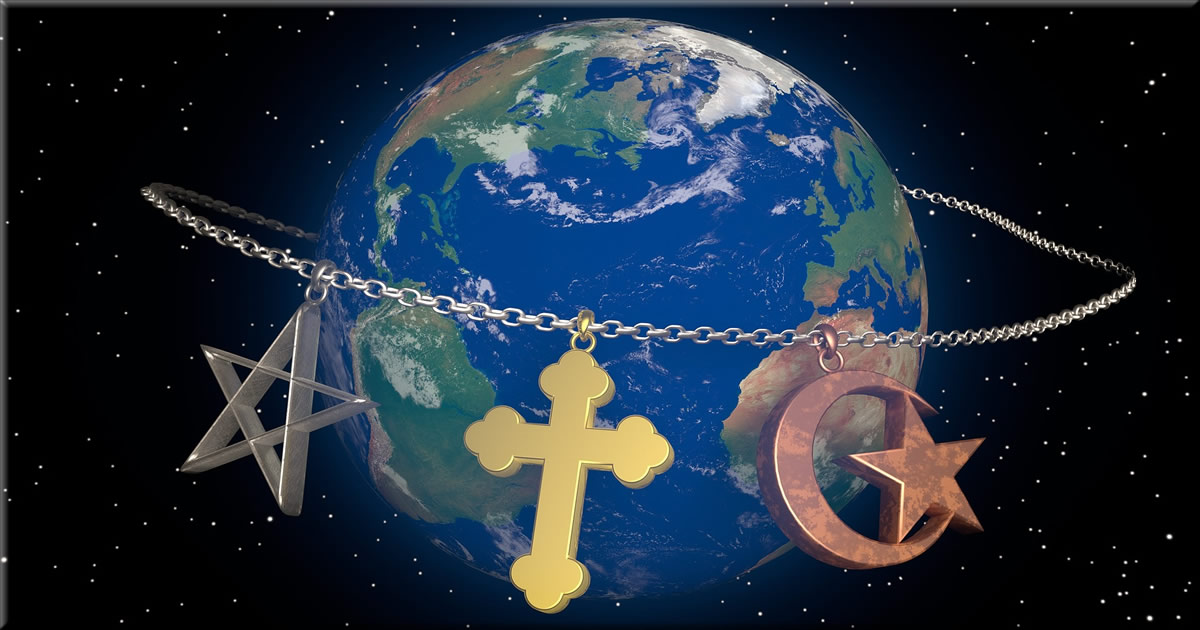
Esoteric and heterodox traditions were often labeled heretical when they challenged institutional authority. Texts were banned, teachings were altered, and narratives were reshaped to maintain centralized power structures.
However, this shadow dimension does not negate the spiritual value found within religious traditions. Instead, it highlights the tension between personal mystical experience and organized doctrine.
Within the framework of forbidden history, religion becomes not just a system of belief, but a historical force that shaped — and sometimes restricted — collective consciousness.
Browse Our Most Impactful Reads: The Dark Side Of The Roman Catholic Church.
Institutional Resistance and Paradigm Protection
Thomas Kuhn’s concept of paradigm shifts describes how scientific revolutions occur.
When dominant frameworks are threatened, institutions often resist — not necessarily out of deception, but out of structural inertia.
Forbidden history studies moments where:
- New discoveries challenged orthodoxy
- Researchers were marginalized
- Alternative theories were excluded from mainstream debate
This does not mean all alternative claims are valid — but it highlights the sociology of knowledge.
Browse Our Most Impactful Reads: The Catholic Church Inquisition.
Suppressed Knowledge and Persecuted Thinkers
Throughout the centuries, individuals who challenged dominant worldviews have often faced resistance, censorship, or outright persecution. Whether questioning cosmology, theology, political power, or hidden networks of influence, these figures frequently became symbols of intellectual rebellion.
Some of them like Galileo Galilei were scientists confronting institutional doctrine. Others like Giordano Bruno were philosophers exploring forbidden metaphysics. While some operated within secretive circles accused of influencing events behind the scenes like the order of the Illuminati.
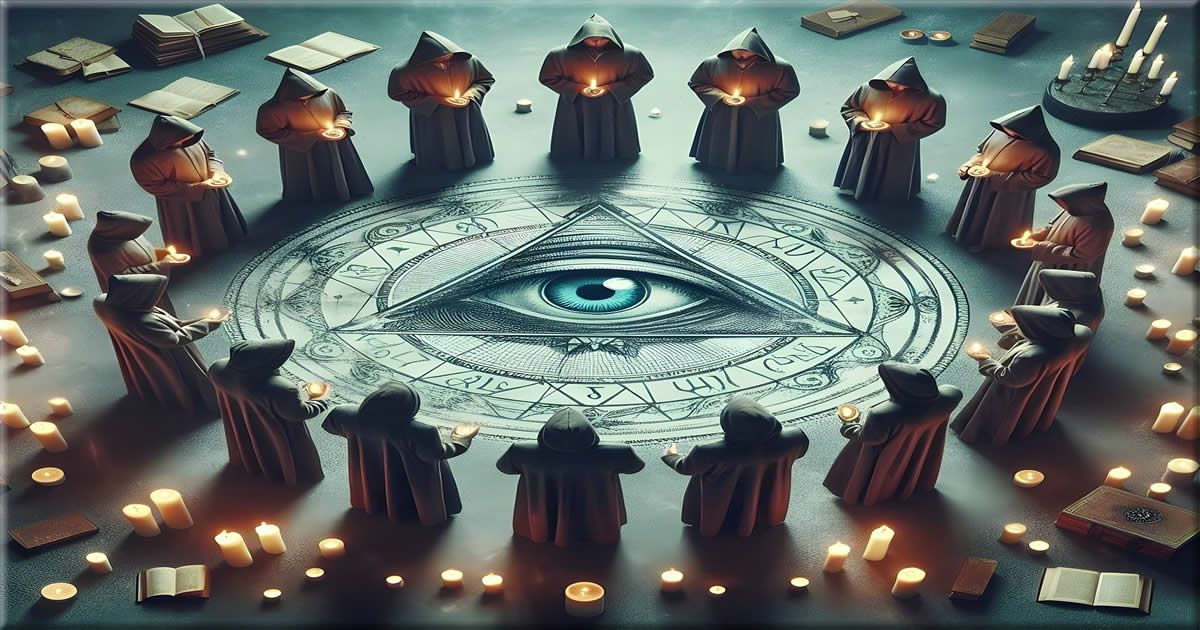
What unites them is not conspiracy — but friction with established authority.
Their stories reveal recurring historical patterns:
- Innovation is labeled as heresy
- Inquiry treated as a threat
- Alternative interpretations suppressed
- Power structures reacting to paradigm shifts
By examining controversial figures, secret societies, and suppressed movements, we begin to see how history is not only written by the victors — but also shaped by those who attempted to silence dissent.
Within Forbidden History, these individuals represent turning points where knowledge collided with power.
Browse Our Most Impactful Reads: Inside The Secret World of The Illuminati.
Censored Wars and Underground Conflicts
History textbooks often emphasize major global wars while overlooking regional conflicts, religious purges, and political massacres that reshaped entire civilizations. Many of these wars were minimized, reframed, or quietly absorbed into simplified narratives like the Albigensian crusade against the Cathars.
Political and religious institutions have repeatedly engaged in conflicts justified by ideology, divine mandate, territorial expansion, or doctrinal purity. Yet not all of these events receive equal historical attention.
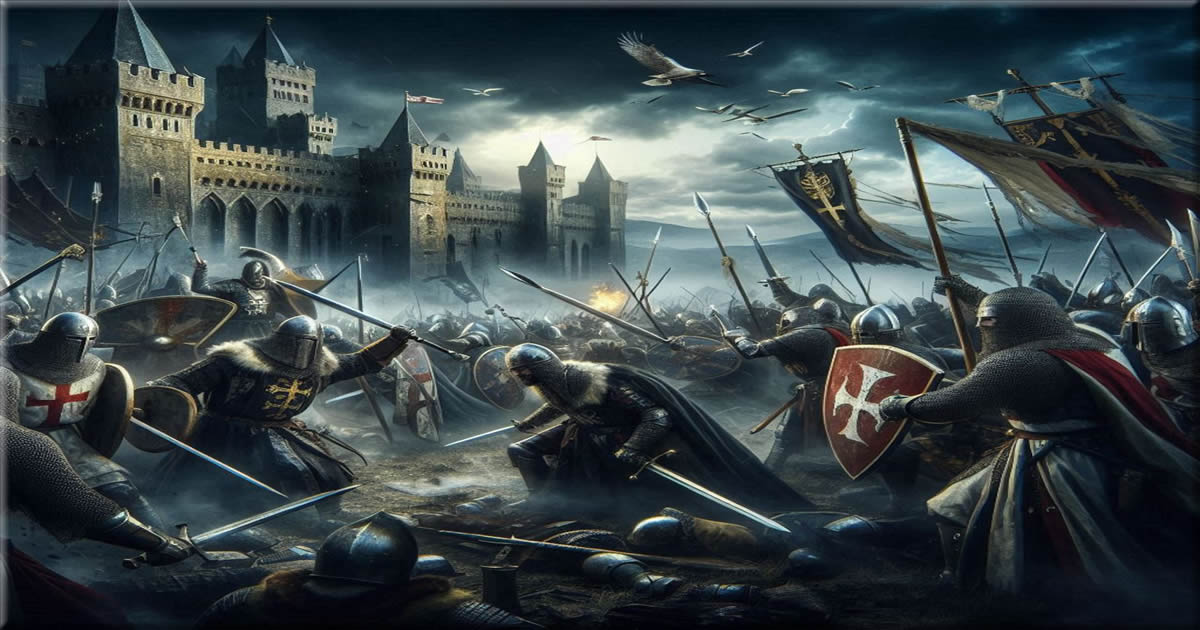
In many cases, conflicts were later:
- Rewritten to protect national identity
- Minimized to preserve institutional legitimacy
- Reframed to justify the victors
- Omitted due to political sensitivity
Religious wars, internal purges, sectarian violence, and ideological revolutions often reveal a deeper struggle — not merely for land, but for control over belief systems and collective perception.
Within the framework of Forbidden History, examining suppressed or underrepresented conflicts allows us to question how historical memory is curated — and who benefits from selective remembrance.
Browse Our Most Impactful Reads: The Colonial Empires: The Black Chronicles Of The White Man.
Distinguishing Inquiry from Conspiracy
A critical distinction must be made.
Forbidden history is not synonymous with conspiracy theory.
Responsible inquiry requires:
- Evidence-based reasoning
- Cross-disciplinary comparison
- Awareness of confirmation bias
- Willingness to revise conclusions
Sensationalism weakens credibility. Structured analysis strengthens it. Our goal is not to replace mainstream history with fantasy — but to examine blind spots.
Why Forbidden History Matters Today
Understanding history shapes:
- Identity
- Culture
- Political narratives
- Religious believes
- Collective psychology
If history is incomplete, our understanding of human potential may also be incomplete.
Exploring alternative perspectives encourages:
- Intellectual humility
- Interdisciplinary curiosity
- Critical examination of assumptions
Forbidden history is less about rebellion — and more about depth.
History is not static. It evolves as new evidence emerges.
Forbidden history does not claim to possess final answers. It asks deeper questions.
- What if some chapters remain unread?
- What if myths preserve memory?
- What if timelines are more complex than assumed?
The purpose of this exploration is not to undermine knowledge — but to expand it.
Awareness grows when inquiry is allowed.
If you want discover more insights, you can find it in the Forbidden History category, or you can even explore Forbidden History videos on our YouTube channel.
Enjoy reading..